
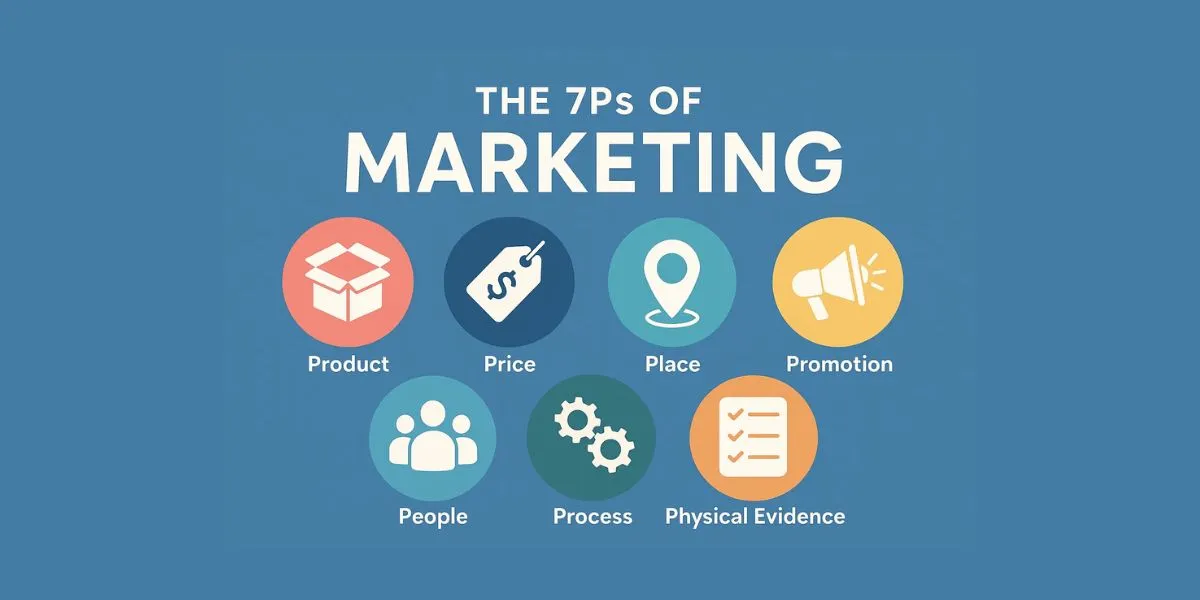
Ever wondered what makes a business truly successful in the world of marketing? Well, it’s not just about having a great product or catchy ads. It’s about mastering the 7Ps of marketing. In this blog, we’ll break down the 7Ps to show you how they work together to create a winning marketing strategy.
Product
Determined by the provider’s ability to manufacture it and the market’s demand for it, the “product” refers to the goods which a producer brings to the market as a means to serve the demand. In more modern terms, the product can be software or an application rather than physical goods bought in store. The “product” can also be services like plumbing, decorating or car repairs – anything that has demand to be capitalised upon.
Place
Referring to the point of transaction and where/how your customers/clients will receive the product. For example, a fast-food restaurant will have a brick-and-mortar building for the customers to obtain their product. The place for a software developer (such as Adobe) would be their official website as that is the predominant place to obtain their product.
Price
Generally determined by supply and demand, price is the monetary value of the services or products provided. Naturally, prices have to be set with careful consideration with aspects like profit margins and reputation being impacted. Competition will play a significant role in pricing as to gain the upper-hand, you need to beat competitors’ prices whilst maintaining healthy margins. Reputation is affected since cheaper products signal low-quality services/products whilst expensive products signal high-quality service/products.
Promotion
Regarding the means in which you communicate your services/products to your target audience. Promotion can be anything from roadside billboards to full-on marketing campaigns (i.e. Deadpool promo campaign, #LikeAGirl campaign or Coca Cola’s ‘Share a Coke’ campaign). In the age of social media, frequent updates to a company’s Facebook page is a standard practice of advertising to the point that a company without a Facebook Page or without frequent updates, is immediately viewed as suspicious or at best, unprofessional.
Physical Evidence
As the name may suggest, physical evidence refers to any proof that your company is legitimate and provides the services it claims to. This can be anything from branding and product packaging to portfolios and buildings (shops, offices, etc..). Physical evidence will build trust with clients and is especially useful for either first-time buyers or anybody paying for a product/service prior to receiving it.
People
In reference to the people behind a product/business. More specifically, each and every person who has played a role, whether directly or indirectly, in bringing a product to market. This ranges from the very top of the ladder: the director or CEO of the company, right down to the people who distribute the product. Each person in between will have had some role in the design, marketing, manufacturing, conceptualizing and funding of the product. Each individual will represent their company and will have had some impact, either minor or major, on their company’s representation and by extension, reputation.
Process
In reference to the systems in place which allow for a smooth transfer of services/products from the provider to the customer. This extends from the external processes such as marketing and distribution to the internal processes such as teamwork efficiency and the actual production of goods/provision of services. Having precise, reliable systems in place will provide two huge benefits to a business: strong organisation that equates to great efficiency, and an easy transfer of goods that increases the likelihood of repeat customers. More specific examples of processes include:
- Website UX (User Experience)
- Delivery Methods
- Delivery/Waiting Times
- Customer Support
- Aftercare
- Research and Development
And there you have it – the 7Ps of marketing demystified. Whether you’re launching a new product, running a service-based business, or trying to boost your brand, these seven elements are your secret sauce for success. Remember, it’s all about finding the right balance and making sure each P plays its part in creating a marketing mix that’s just right for your business. So go ahead, put these principles into action, and watch your marketing efforts soar to new heights!


